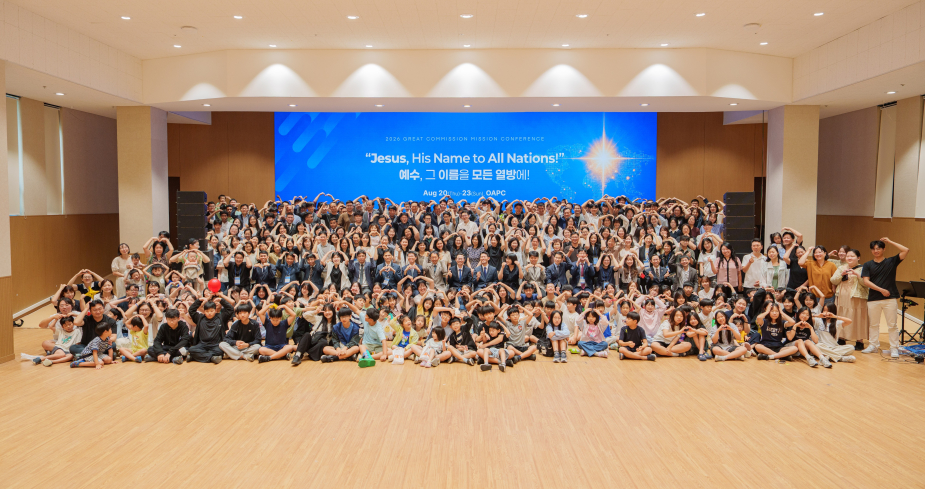
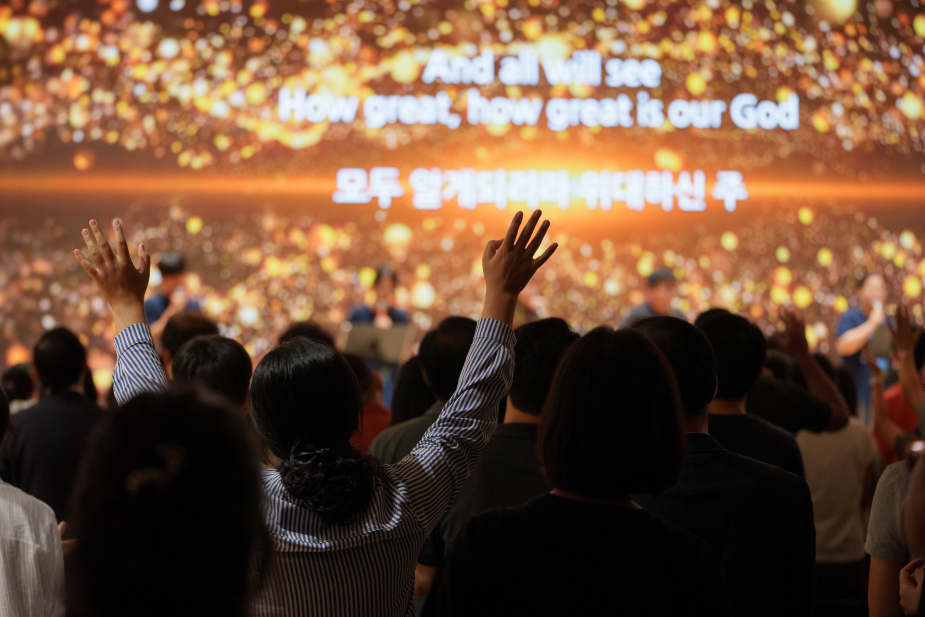
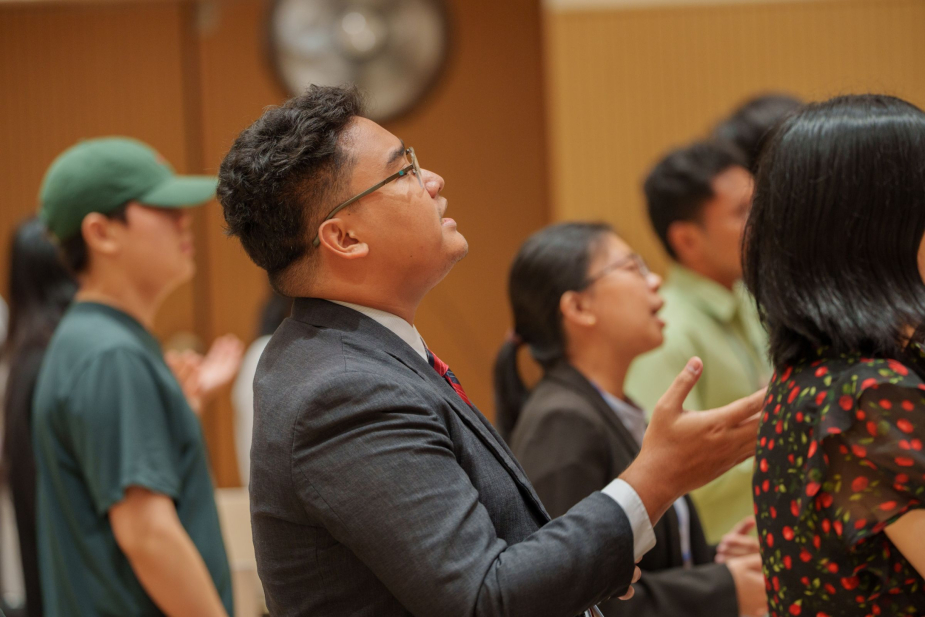
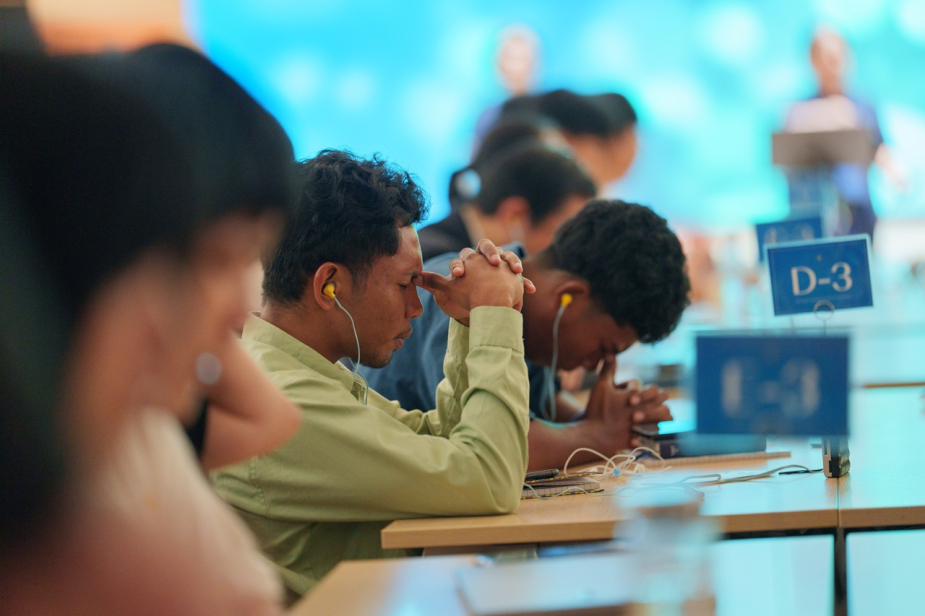
HOENGSEONG, South Korea - The 2026 Great Commission Mission Conference (GCMC) concluded on August 23 after four days of worship, Bible teaching, mission-focused lectures, and spiritual reflection at Immanuel Church at the Olivet Asia Pacific Center (OAPC) in Hoengseong.
Held from August 20 to 23, the conference centered on a clear progression of Christian faith: encountering Jesus Christ, receiving the grace of the Cross, being restored in relationship with God, growing as a disciple, and carrying the Gospel to others.
This movement from personal faith to active mission also reflects the conference's broader vision of Christian life: receiving the Gospel, growing in faith, and allowing that faith to shape the way believers live and serve.
The conference opened with a worship service in which the senior pastor from Busan Ephesus Church preached from John 4 on Jesus' encounter with the Samaritan woman. The message addressed the spiritual thirst that cannot ultimately be satisfied by success, possessions, or life experiences, and pointed to Jesus Christ as the one who gives living water and new life.
The preacher also drew attention to the way Jesus approached the Samaritan woman first, crossing longstanding social and religious barriers. Participants were encouraged to bring their own questions and longings before God and allow those questions to become a starting point for a deeper encounter with Christ.
On the second day, a series of Bible lectures explored sin, forgiveness, restoration, and the Cross.
The General Secretary of the OAAP delivered a message on "Jesus Who Forgives," emphasizing the importance of approaching God honestly and receiving the forgiveness made possible through Christ. He also connected reconciliation with God to reconciliation with others, teaching that those who have received forgiveness are called to extend love and mercy to their neighbors.
In another lecture, the pastor of Saean Church in Seoul examined the biblical account of creation and the fall in Genesis. He explained sin as humanity's departure from God's good order and highlighted pride as a root of that separation. The message pointed participants toward restoration through Jesus Christ, emphasizing that reconciliation with God begins not with human righteousness, but with the grace of Christ.
The senior pastor of Seoul Revival Church then focused on the Cross, describing the death and resurrection of Jesus as central to understanding who Christ is and what He came to accomplish. He emphasized the atoning meaning of the Cross and called participants to know Jesus not simply as a teacher, healer, or prophet, but as the Son of God and Savior.
Together, the lectures placed the Gospel itself at the center of Christian life and mission. Before believers are sent to serve others, they must first know the grace they have received and be formed by the Word they are called to proclaim.
The third day expanded this focus from personal salvation toward the Kingdom of God, discipleship, and world mission.
The Bible lecturers presented the Kingdom of God through Isaiah 11 and other biblical passages as a vision of restoration, peace, and reconciliation. He encouraged participants to understand the hope of God's Kingdom not as an abstract idea, but as a calling to overcome barriers, share the Gospel, and participate in God's work of restoration in the world.
The pastor of Daegu Dongsan Church followed with a message on discipleship from Luke 9:57-62. Asking participants whether they were merely admirers of Jesus or true disciples, he described discipleship as a life of obedience, freedom from attachment to possessions, commitment to the priority of God's Kingdom, and determination to follow Christ without turning back.
The conference then turned directly toward the global missionary task.
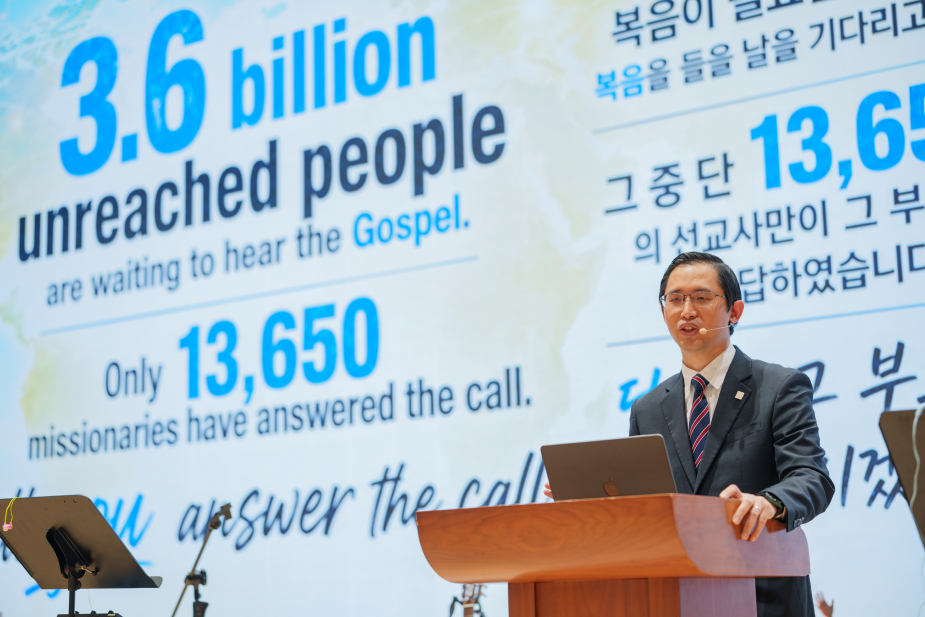
During the Mission Challenge session, the President of the All Nations Center presented an overview of world mission and drew attention to the large number of people groups that still have limited access to the Gospel. He highlighted the continuing imbalance between the scale of the missionary need and the resources devoted to unreached peoples, while also presenting examples of discipleship movements that have grown through immediate obedience to God's Word.
The session underscored that the Great Commission belongs to the whole Church. World mission is not reserved for a small number of specialists. It grows from believers and local congregations that receive the Gospel, obey Christ, raise disciples, and become willing to cross geographic, cultural, linguistic, and social boundaries for the sake of others.
A special lecture led by a faculty member serving at the Olivet University main campus in the United States also addressed the rapidly changing technological environment in which churches carry out ministry today. The session offered a practical introduction to artificial intelligence and its possible ministry applications, while emphasizing the importance of discernment, verification, ethical responsibility, and sound biblical values.
Participants were encouraged neither to fear technological development nor to embrace it uncritically. Instead, Christians were urged to use new tools wisely in areas such as research, organization, communication, and repetitive tasks, while maintaining human responsibility for judgment and decision-making.
The inclusion of the session reflected a broader concern of the conference: Christian mission must remain firmly rooted in Scripture while thoughtfully engaging the real conditions of the communities and cultures in which churches serve.
The four-day gathering concluded on August 23 with a closing worship service led by the pastor of Milal Church in Daejeon. Preaching from Matthew 28:18-20, he returned participants to Jesus' command to "make disciples of all nations."
The message emphasized that the grace believers receive is never intended to end with themselves. The Great Commission begins with giving to others what Christians have already received from Christ: grace, forgiveness, reconciliation, love, and the hope of salvation.
Participants were also reminded that carrying out the Gospel mission does not ultimately depend on exceptional human ability. Christ holds all authority, while the believer's calling is to respond with faith, humility, and obedience.
That message brought the conference full circle. Participants began by considering the Samaritan woman who encountered Christ in her spiritual thirst and concluded by hearing Christ's command to go and make disciples. Between those two points stood the Cross, forgiveness, restoration, the Kingdom of God, discipleship, and a world still in need of the Gospel.
The 2026 GCMC offered a local expression of World Olivet Assembly's wider identity as a global evangelical body committed to advancing world mission through churches, ministries, and believers formed by Scripture. Its vision of mission begins with the transforming Gospel of Jesus Christ, takes root in local churches and individual lives, and moves outward through disciples who are prepared to serve their neighbors and carry the message of salvation across boundaries.
As churches connected through World Olivet Assembly continue serving in communities around the world, gatherings such as GCMC help strengthen a shared calling: to remain centered on Christ, grounded in the Word of God, united in the Gospel, and ready to take part in the Great Commission wherever God has placed them.
The conference closed with participants returning to their respective mission fields with a renewed call not simply to remember what they had received, but to live it and share it.